Námsgögn
Innskrá
Hleð efnisyfirliti...
Leita í bók...
Efnafræði 2e (IS)
  • Formáli
    • Inngangur
    • 1.1 Efnafræði í samhengi
    • 1.2 Hamir og flokkun efnis
    • 1.3 Eðlis- og efnafræðilegir eiginleikar
    • 1.4 Mælingar
    • 1.5 Óvissa, réttleiki og nákvæmni mælinga
    • 1.6 Stærðfræðileg meðhöndlun mæliniðurstaðna
    • Lykilhugtök
    • Lykiljöfnur
    • Samantekt
    • Æfingar
    • Inngangur
    • 2.1 Fyrstu hugmyndir atómkenningarinnar
    • 2.2 Þróun atómkenningarinnar
    • 2.3 Atómbygging og táknmál
    • 2.4 Efnaformúlur
    • 2.5 Lotukerfið
    • 2.6 Jóna- og sameindasambönd
    • 2.7 Nafnakerfi efna
    • Lykilhugtök
    • Lykiljöfnur
    • Samantekt
    • Æfingar
    • Inngangur
    • 3.1 Formúlumassi og mólhugtakið
    • 3.2 Ákvörðun reynslu- og sameindaformúla
    • 3.3 Mólstyrkur
    • 3.4 Aðrar einingar fyrir styrk lausna
    • Lykilhugtök
    • Lykiljöfnur
    • Samantekt
    • Æfingar
    • Inngangur
    • 4.1 Ritun og stilling efnajafna
    • 4.2 Flokkun efnahvarfa
    • 4.3 Efnamagnfræði efnahvarfa
    • 4.4 Heimtur efnahvarfa
    • 4.5 Megindleg efnagreining
    • Lykilhugtök
    • Lykiljöfnur
    • Samantekt
    • Æfingar
    • Inngangur
    • 5.1 Grunnatriði orku
    • 5.2 Varmamælingar
    • 5.3 Vermi
    • Lykilhugtök
    • Lykiljöfnur
    • Samantekt
    • Æfingar
    • Inngangur
    • 6.1 Rafsegulorka
    • 6.2 Bohr-líkanið
    • 6.3 Þróun skammtafræðinnar
    • 6.4 Rafeindaskipan atóma (Rafeindahýsingar)
    • 6.5 Lotubundnar breytingar á eiginleikum frumefna
    • Lykilhugtök
    • Lykiljöfnur
    • Samantekt
    • Æfingar
    • Inngangur
    • 7.1 Jónatengi
    • 7.2 Samgild tengi
    • 7.3 Lewis-tákn og byggingar
    • 7.4 Formlegar hleðslur og rafeindaómun
    • 7.5 Styrkur jóna- og samgildra tengja
    • 7.6 Sameindabygging og skautun
    • Lykilhugtök
    • Lykiljöfnur
    • Samantekt
    • Æfingar
    • Inngangur
    • 8.1 Gildistengjakenningin
    • 8.2 Blandaðar atómsvigrúm
    • 8.3 Fjöltengi
    • 8.4 Sameindasvigrúmakenningin
    • Lykilhugtök
    • Lykiljöfnur
    • Samantekt
    • Æfingar
    • Inngangur
    • 9.1 Gasþrýstingur
    • 9.2 Tengsl þrýstings, rúmmáls, magns og hitastigs: Kjörgaslögmálið
    • 9.3 Hvarffræði gastegunda, blandna og efnahvarfa
    • 9.4 Útflæði og sveim gastegunda
    • 9.5 Hreyfifræðikenning sameinda
    • 9.6 Frávik frá kjörgashegðun
    • Lykilhugtök
    • Lykiljöfnur
    • Samantekt
    • Æfingar
    • Inngangur
    • 10.1 Millisameindakraftar
    • 10.2 Eiginleikar vökva
    • 10.3 Fasaskipti
    • 10.4 Fasarit
    • 10.5 Fast ástand efnis
    • 10.6 Grindarbyggingar í kristölluðum föstum efnum
    • Lykilhugtök
    • Lykiljöfnur
    • Samantekt
    • Æfingar
    • Inngangur
    • 11.1 Upplausnarferlið
    • 11.2 Raflausnir
    • 11.3 Leysni
    • 11.4 Samræmdir eiginleikar
    • 11.5 Kvoður
    • Lykilhugtök
    • Lykiljöfnur
    • Samantekt
    • Æfingar
    • Inngangur
    • 12.1 Hraði efnahvarfa
    • 12.2 Þættir sem hafa áhrif á hvarfahraða
    • 12.3 Hraðalögmál
    • 12.4 Heildarhraðalögmál
    • 12.5 Árekstrakenningin
    • 12.6 Hvarfgangar
    • 12.7 Hvatning
    • Lykilhugtök
    • Lykiljöfnur
    • Samantekt
    • Æfingar
    • Inngangur
    • 13.1 Efnajafnvægi
    • 13.2 Jafnvægisfastar
    • 13.3 Hliðrun jafnvægis: Lögmál Le Châteliers
    • 13.4 Jafnvægisútreikningar
    • Lykilhugtök
    • Lykiljöfnur
    • Samantekt
    • Æfingar
    • Inngangur
    • 14.1 Brønsted-Lowry sýrur og basar
    • 14.2 pH og pOH
    • 14.3 Hlutfallslegur styrkur sýra og basa
    • 14.4 Vatnsrof salta
    • 14.5 Fjölróteindasýrur
    • 14.6 Stuðpúðar
    • 14.7 Sýru-basa títranir
    • Lykilhugtök
    • Lykiljöfnur
    • Samantekt
    • Æfingar
    • Inngangur
    • 15.1 Útfelling og upplausn
    • 15.2 Lewis sýrur og basar
    • 15.3 Tengd jafnvægi
    • Lykilhugtök
    • Lykiljöfnur
    • Samantekt
    • Æfingar
    • Inngangur
    • 16.1 Sjálfkrafa ferli
    • 16.2 Óreiða
    • 16.3 Annað og þriðja lögmál varmafræðinnar
    • 16.4 Frjáls orka
    • Lykilhugtök
    • Lykiljöfnur
    • Samantekt
    • Æfingar
    • Inngangur
    • 17.1 Upprifjun á oxunar-afoxunarhvörfum
    • 17.2 Rafhlöður
    • 17.3 Rafskauts- og rafhlöðuspennur
    • 17.4 Spenna, frjáls orka og jafnvægi
    • 17.5 Rafhlöður og efnarafalar
    • 17.6 Tæring
    • 17.7 Rafgreining
    • Lykilhugtök
    • Lykiljöfnur
    • Samantekt
    • Æfingar
    • Inngangur
    • 18.1 Lotubundnir eiginleikar
    • 18.2 Tilvist og framleiðsla dæmigerðra málma
    • 18.3 Bygging og almennir eiginleikar hálfmálma
    • 18.4 Bygging og almennir eiginleikar málmleysingja
    • 18.5 Tilvist, framleiðsla og efnasambönd vetnis
    • 18.6 Tilvist, framleiðsla og eiginleikar karbónata
    • 18.7 Tilvist, framleiðsla og eiginleikar niturs
    • 18.8 Tilvist, framleiðsla og eiginleikar fosfórs
    • 18.9 Tilvist, framleiðsla og efnasambönd súrefnis
    • 18.10 Tilvist, framleiðsla og eiginleikar brennisteins
    • 18.11 Tilvist, framleiðsla og eiginleikar halógena
    • 18.12 Tilvist, framleiðsla og eiginleikar eðalgastegunda
    • Lykilhugtök
    • Samantekt
    • Æfingar
    • Inngangur
    • 19.1 Tilvist, framleiðsla og eiginleikar hliðarmálma og efnasambanda þeirra
    • 19.2 Fléttuefnafræði hliðarmálma
    • 19.3 Litrófs- og seguleiginleikar fléttuefnasambanda
    • Lykilhugtök
    • Samantekt
    • Æfingar
    • Inngangur
    • 20.1 Kolvetni
    • 20.2 Alkóhól og eterar
    • 20.3 Aldehýð, ketón, karboxýlsýrur og esterar
    • 20.4 Amín og amíð
    • Lykilhugtök
    • Samantekt
    • Æfingar
    • Inngangur
    • 21.1 Bygging og stöðugleiki kjarna
    • 21.2 Kjarnajöfnur
    • 21.3 Geislavirk hrörnun
    • 21.4 Umbreyting og kjarnorka
    • 21.5 Notkun geislasamsætna
    • 21.6 Líffræðileg áhrif geislunar
    • Lykilhugtök
    • Lykiljöfnur
    • Samantekt
    • Æfingar
  • A | Lotukerfið
  • B | Nauðsynleg stærðfræði
  • C | Einingar og umreiknistuðlar
  • D | Grunnfastar í eðlisfræði
  • E | Eiginleikar vatns
  • F | Samsetning sýra og basa á markaði
  • G | Staðalvarmafræðilegir eiginleikar valinna efna
  • H | Jónunarfastar daufra sýra
  • I | Jónunarfastar daufra basa
  • J | Leysnimargfeldi
  • K | Myndunarfastar fléttujóna
  • L | Staðalrafskautsmætti (hálfrafhlöðumætti)
  • M | Helmingunartímar nokkurra geislasamsætna
    • Kafli 1
    • Kafli 2
    • Kafli 3
    • Kafli 4
    • Kafli 5
    • Kafli 6
    • Kafli 7
    • Kafli 8
    • Kafli 9
    • Kafli 10
    • Kafli 11
    • Kafli 12
    • Kafli 13
    • Kafli 14
    • Kafli 15
    • Kafli 16
    • Kafli 17
    • Kafli 18
    • Kafli 19
    • Kafli 20
    • Kafli 21
  • Atriðaskrá
  • Efnafræði 2e (IS)SvaralykillKafli 7
    Svaralykill

    Kafli 7

    FYRRI KAFLI

    Kafli 6

    NÆSTI KAFLI

    Kafli 8

    1.

    Róteindirnar í kjarnanum breytast ekki í venjulegum efnahvörfum. Aðeins ytri rafeindirnar hreyfast. Jákvæðar hleðslur myndast þegar rafeindir tapast.

    3.

    P, I, Cl og O myndu mynda anjónir vegna þess að þau eru málmleysingjar. Mg, In, Cs, Pb og Co myndu mynda katjónir vegna þess að þau eru málmar.

    5.

    (a) P³⁻; (b) Mg²⁺; (c) Al³⁺; (d) O²⁻; (e) Cl⁻; (f) Cs⁺

    7.

    (a) [Ar] 4s² 3d¹⁰ 4p⁶; (b) [Kr] 4d¹⁰ 5s² 5p⁶; (c) 1s²; (d) [Kr] 4d¹⁰; (e) [He] 2s² 2p⁶; (f) [Ar] 3d¹⁰; (g) 1s²; (h) [He] 2s² 2p⁶; (i) [Kr] 4d¹⁰ 5s²; (j) [Ar] 3d⁷; (k) [Ar] 3d⁶; (l) [Ar] 3d¹⁰ 4s²

    9.

    (a) 1s² 2s² 2p⁶ 3s² 3p¹; Al³⁺: 1s² 2s² 2p⁶; (b) 1s² 2s² 2p⁶ 3s² 3p⁶ 3d¹⁰ 4s² 4p⁵; 1s² 2s² 2p⁶ 3s² 3p⁶ 3d¹⁰ 4s² 4p⁶; (c) 1s² 2s² 2p⁶ 3s² 3p⁶ 3d¹⁰ 4s² 4p⁶ 5s²; Sr²⁺: 1s² 2s² 2p⁶ 3s² 3p⁶ 3d¹⁰ 4s² 4p⁶; (d) 1s² 2s¹; Li⁺: 1s²; (e) 1s² 2s² 2p⁶ 3s² 3p⁶ 3d¹⁰ 4s² 4p³; 1s² 2s² 2p⁶ 3s² 3p⁶ 3d¹⁰ 4s² 4p⁶; (f) 1s² 2s² 2p⁶ 3s² 3p⁴; 1s² 2s² 2p⁶ 3s² 3p⁶

    11.

    NaCl samanstendur af stökum jónum sem raðað er í kristalgrind, en ekki af samgildum sameindum.

    13.

    jónaefni: (b), (d), (e), (g) og (i); samgild efni: (a), (c), (f), (h), (j) og (k)

    15.

    (a) Cl; (b) O; (c) O; (d) S; (e) N; (f) P; (g) N

    17.

    (a) H, C, N, O, F; (b) H, I, Br, Cl, F; (c) H, P, S, O, F; (d) Na, Al, H, P, O; (e) Ba, H, As, N, O

    19.

    N, O, F og Cl

    21.

    (a) HF; (b) CO; (c) OH; (d) PCl; (e) NH; (f) PO; (g) CN

    23.

    (a) átta rafeindir:

    A Lewis dot diagram shows the symbol for arsenic, A s, surrounded by eight dots and a superscripted three negative sign.

    (b) átta rafeindir:

    A Lewis dot diagram shows the symbol for iodine, I, surrounded by eight dots and a superscripted negative sign.

    (c) engar rafeindir Be²⁺ (d) átta rafeindir:

    A Lewis dot diagram shows the symbol for oxygen, O, surrounded by eight dots and a superscripted two negative sign.

    (e) engar rafeindir Ga³⁺ (f) engar rafeindir Li⁺ (g) átta rafeindir:

    A Lewis dot diagram shows the symbol for nitrogen, N, surrounded by eight dots and a superscripted three negative sign.
    25.

    (a)

    Two Lewis structures are shown. The left shows the symbol M g with a superscripted two positive sign while the right shows the symbol S surrounded by eight dots and a superscripted two negative sign.

    (b)

    Two Lewis structures are shown. The left shows the symbol A l with a superscripted three positive sign while the right shows the symbol O surrounded by eight dots and a superscripted two negative sign.

    (c)

    Two Lewis structures are shown. The left shows the symbol G a with a superscripted three positive sign while the right shows the symbol C l surrounded by eight dots and a superscripted negative sign.

    (d)

    Two Lewis structures are shown. The left shows the symbol K with a superscripted positive sign while the right shows the symbol O surrounded by eight dots and a superscripted two negative sign.

    (e)

    Two Lewis structures are shown. The left shows the symbol L i with a superscripted positive sign while the right shows the symbol N surrounded by eight dots and a superscripted three negative sign.

    (f)

    Two Lewis structures are shown. The left shows the symbol K with a superscripted positive sign while the right shows the symbol F surrounded by eight dots and a superscripted negative sign.
    27.
    A Lewis diagram shows two phosphorus atoms triple bonded together each with one lone electron pair.
    29.

    (a)

    A Lewis structure shows two oxygen atoms double bonded together, and each has two lone pairs of electrons.

    Í þessu tilfelli er Lewis-byggingin ófullnægjandi til að sýna þá staðreynd að tilraunir hafa sýnt fram á tvær óparaðar rafeindir í hverri súrefnissameind. (b)
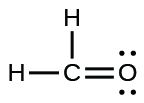
    A Lewis structure shows a carbon atom that is single bonded to two hydrogen atoms and double bonded to an oxygen atom. The oxygen atom has two lone pairs of electrons.

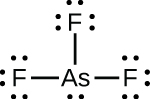
    (c)

    A Lewis structure shows an arsenic atom single bonded to three fluorine atoms. Each fluorine atom has a lone pair of electrons.

    (d)

    A Lewis structure shows a nitrogen atom with a lone pair of electrons single bonded to a chlorine atom that has three lone pairs of electrons. The nitrogen is also double bonded to an oxygen which has two lone pairs of electrons.

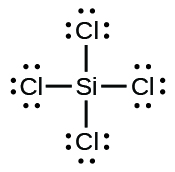
    (e)

    A Lewis structure shows a silicon atom that is single bonded to four chlorine atoms. Each chlorine atom has three lone pairs of electrons.

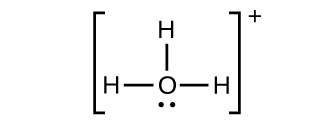
    (f)

    A Lewis structure shows an oxygen atom with a lone pair of electrons single bonded to three hydrogen atoms. The structure is surrounded by brackets with a superscripted positive sign.

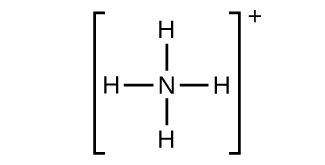
    (g)

    A Lewis structure shows a nitrogen atom single bonded to four hydrogen atoms. The structure is surrounded by brackets with a superscripted positive sign.

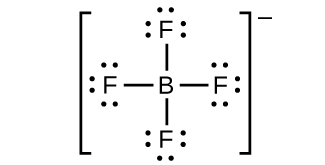
    (h)

    A Lewis structure shows a boron atom single bonded to four fluorine atoms. Each fluorine atom has three lone pairs of electrons. The structure is surrounded by brackets with a superscripted negative sign.

    (i)

    A Lewis structure shows two carbon atoms that are triple bonded together. Each carbon is also single bonded to a hydrogen atom.

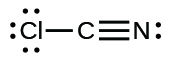
    (j)

    A Lewis structure shows a carbon atom that is triple bonded to a nitrogen atom that has one lone pair of electrons. The carbon is also single bonded to a chlorine atom that has three lone pairs of electrons.

    (k)

    A Lewis structure shows two carbon atoms joined with a triple bond. A superscripted 2 positive sign lies to the right of the second carbon.
    31.

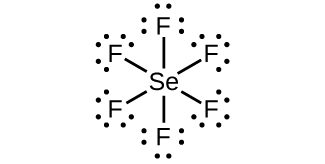
    (a) SeF₆:

    A Lewis structure shows a selenium atom single bonded to six fluorine atoms, each with three lone pairs of electrons.

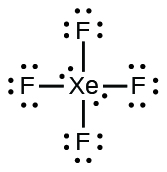
    (b) XeF₄ :

    A Lewis structure shows a xenon atom with two lone pairs of electrons. It is single bonded to four fluorine atoms each with three lone pairs of electrons.

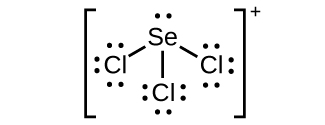
    (c) SeCl₃⁺ : SeCl₃⁺ :

    A Lewis structure shows a selenium atom with one lone pair of electrons single bonded to three chlorine atoms each with three lone pairs of electrons. The whole structure is surrounded by brackets.

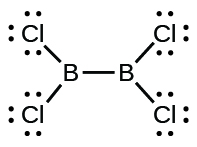
    (d) Cl₂ BBCl₂ :

    A Lewis structure shows two boron atoms that are single bonded together. Each is also single bonded to two chlorine atoms that both have three lone pairs of electrons.
    33.

    Tvær gildisrafeindir frá hverju Pb-atómi færast yfir á Cl-atóm. Pb²⁺-jónin sem myndast hefur gildishvolfsskipanina 6s². Tveimur gildisrafeindum í HCl-sameindinni er deilt, en hinar sex eru staðsettar á Cl-atóminu sem stök rafeindapör.
    35.
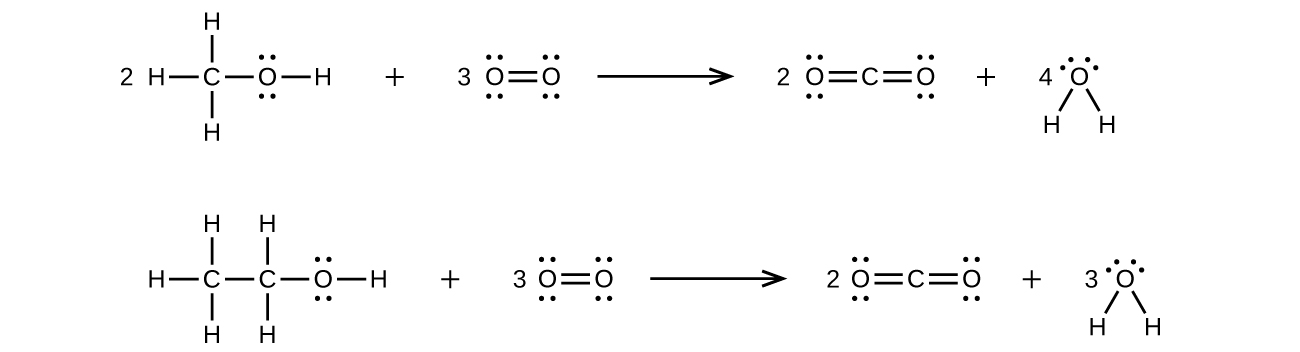
    Two reactions are shown using Lewis structures. The top reaction shows a carbon atom, single bonded to three hydrogen atoms and single bonded to an oxygen atom with two lone pairs of electrons. The oxygen atom is also bonded to a hydrogen atom. This is followed by a plus sign and the number one point five, followed by two oxygen atoms bonded together with a double bond and each with two lone pairs of electrons. A right-facing arrow leads to a carbon atom that is double bonded to two oxygen atoms, each of which has two lone pairs of electrons. This structure is followed by a plus sign, a number two, and a structure made up of an oxygen with two lone pairs of electrons single bonded to two hydrogen atoms. The bottom reaction shows a carbon atom, single bonded to three hydrogen atoms and single bonded to another carbon atom. The second carbon atom is single bonded to two hydrogen atoms and one oxygen atom with two lone pairs of electrons. The oxygen atom is also bonded to a hydrogen atom. This is followed by a plus sign and the number three, followed by two oxygen atoms bonded together with a double bond. Each oxygen atom has two lone pairs of electrons. A right-facing arrow leads to a number two and a carbon atom that is double bonded to two oxygen atoms, each of which has two lone pairs of electrons. This structure is followed by a plus sign, a number three, and a structure made up of an oxygen with two lone pairs of electrons single bonded to two hydrogen atoms.
    37.
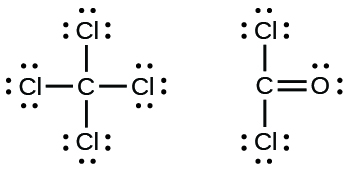
    Two Lewis structures are shown. The left depicts a carbon atom single bonded to four chlorine atoms, each with three lone pairs of electrons. The right shows a carbon atom double bonded to an oxygen atom that has two lone pairs of electrons. The carbon atom is also single bonded to two chlorine atoms, each of which has three lone pairs of electrons.
    39.

    (a)

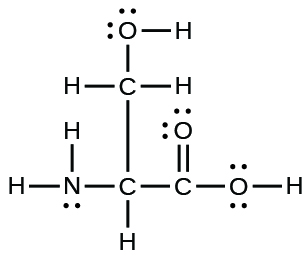
    A Lewis structure is shown. A nitrogen atom is single bonded to two hydrogen atoms and a carbon atom. The carbon atom is single bonded to a hydrogen atom and two other carbon atoms. One of these carbon atoms is single bonded to two hydrogen atoms and an oxygen atom. The oxygen atom is bonded to a hydrogen atom. The other carbon is single bonded to two oxygen atoms, one of which is bonded to a hydrogen atom. The oxygen atoms have two lone pairs of electron dots, and the nitrogen atom has one lone pair of electron dots.

    (b)

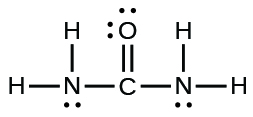
    A Lewis structure is shown. A nitrogen atom is single bonded to two hydrogen atoms and a carbon atom. The carbon atom is single bonded to an oxygen atom and one nitrogen atom. That nitrogen atom is then single bonded to two hydrogen atoms. The oxygen atom has two lone pairs of electron dots, and the nitrogen atoms have one lone pair of electron dots each.

    (c)

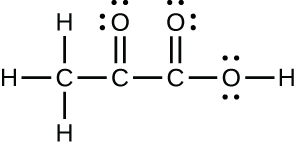
    A Lewis structure is shown. A carbon atom is single bonded to three hydrogen atoms and a carbon atom. The carbon atom is single bonded to an oxygen atom and a third carbon atom. This carbon is then single bonded to two oxygen atoms, one of which is single bonded to a hydrogen atom. Each oxygen atom has two lone pairs of electron dots.

    (d)

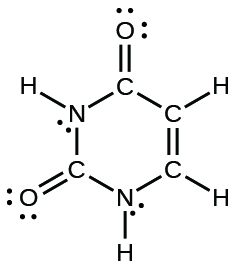
    A Lewis hexagonal ring structure is shown. From the top of the ring, three carbon atoms, one nitrogen atom, a carbon atom and a nitrogen atom are single bonded to one another. The top carbon is single bonded to an oxygen, the second and third carbons and the nitrogen atom are each single bonded to a hydrogen atom. The next carbon is single bonded to an oxygen atom and the last nitrogen is single bonded to a hydrogen atom. The oxygen atoms have two lone pairs of electron dots, and the nitrogen atoms have one lone pair of electron dots.

    (e)

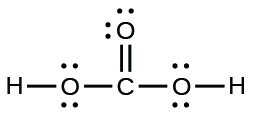
    A Lewis structure is shown. A carbon atom is single bonded to three oxygen atoms. Two of those oxygen atoms are each single bonded to a hydrogen atom. Each oxygen atom has two lone pairs of electron dots.
    41.
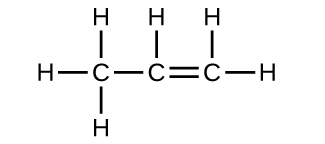
    A Lewis structure is shown. A carbon atom is single bonded to three hydrogen atoms and another carbon atom. The second carbon atom is double bonded to another carbon atom and single bonded to a hydrogen atom. The last carbon is single bonded to two hydrogen atoms.
    43.

    Hvert tengi felur í sér deilingu rafeinda milli atóma. Tveimur rafeindum er deilt í eintengi, fjórum rafeindum er deilt í tvítengi og sex rafeindum er deilt í þrítengi.

    45.

    (a)

    Two Lewis structures are shown with a double-headed arrow in between. The left structure shows a sulfur atom with a lone pair of electrons single bonded to the left to an oxygen atom with three lone pairs of electrons. The sulfur atom is also double bonded on the right to an oxygen atom with two lone pairs of electrons. The right structure depicts the same atoms, but this time the double bond is between the left oxygen and the sulfur atom. The lone pairs of electrons have also shifted to account for the change of bond types. The sulfur atom in the right structures, also has a third electron dot below it.

    (b)

    Three Lewis structures are shown, with double-headed arrows in between, each surrounded by brackets and a superscripted two negative sign. The left structure depicts a carbon atom bonded to three oxygen atoms. It is single bonded to two of these oxygen atoms, each of which has three lone pairs of electrons, and double bonded to the third, which has two lone pairs of electrons. The double bond is located between the bottom oxygen and the carbon. The central and right structures are the same as the first, but the position of the double bonded oxygen has moved to the left oxygen in the right structure while the central structure only has single bonds. The lone pairs of electrons change to correspond with the bonds as well.

    (c)

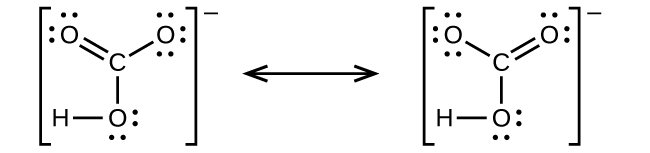
    Two Lewis structures are shown, with a double-headed arrow in between, each surrounded by brackets and a superscripted negative sign. The left structure depicts a carbon atom bonded to three oxygen atoms. It is single bonded to one of these oxygen atoms, which has three lone pairs of electrons, and double bonded to the other two, which have two lone pairs of electrons. One of the double bonded oxygen atoms also has a single bond to a hydrogen atom. The right structure is the same as the first, but there is only one double bonded oxygen. The oxygen with the single bonded hydrogen now has a single bond to the carbon atom. The lone pairs of electrons have also changed to correspond with the bonds.

    (d)

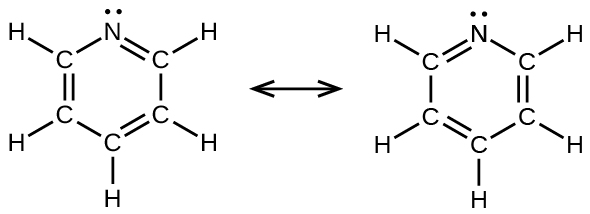
    Two Lewis structures are shown with a double-headed arrow in between. The left structure depicts a hexagonal ring composed of five carbon atoms, each single bonded to a hydrogen atom, and one nitrogen atom that has a lone pair of electrons. The ring has alternating single and double bonds. The right structure is the same as the first, but each double bond has rotated to a new position.

    (e)

    Two Lewis structures are shown with a double-headed arrow in between. The left structure shows a carbon atom single bonded to two hydrogen atoms and a second carbon atom. The second carbon atom is single bonded to a hydrogen atom and double bonded to a third carbon atom. The third carbon atom is single bonded to two hydrogen atoms. The whole structure is surrounded by brackets and a superscripted negative sign. The right structure shows a carbon atom single bonded to two hydrogen atoms and double bonded to a second carbon atom. The second carbon atom is single bonded to a hydrogen atom and a third carbon atom. The third carbon atom is single bonded to two hydrogen atoms. The whole structure is surrounded by brackets and a superscripted negative sign.
    47.
    A pair of Lewis structures are shown with a double-headed arrow in between the pair. The left structure of the first pair shows a nitrogen atom with one lone pair of electrons single bonded to an oxygen atom with three lone pairs of electrons. It is also double bonded to an oxygen with two lone pairs of electrons. The right image of this pair depicts the mirror image of the left. Both images are surrounded by brackets and a superscripted negative sign. They are labeled, “For N O subscript two superscript negative sign.”
    49.

    (a)

    This structure shows a carbon atom double bonded to two oxygen atoms, each of which has two lone pairs of electrons.

    (b)

    The right structure of this pair shows a carbon atom with one lone pair of electrons triple bonded to an oxygen with one lone pair of electrons.

    CO hefur sterkasta kolefnis-súrefnistengið vegna þess að þrítengi tengir C og O. CO₂ hefur tvítengi.

    51.

    (a) H: 0, Cl: 0; (b) C: 0, F: 0; (c) P: 0, Cl: 0; (d) P: 0, F: 0

    53.

    Cl í Cl₂: 0; Cl í BeCl₂: 0; Cl í ClF₅: 0

    55.

    (a)

    Two Lewis structures are shown with a double-headed arrow in between. The left structure shows an oxygen atom with one lone pair of electrons single bonded to an oxygen atom with three lone pairs of electrons. It is also double bonded to an oxygen atom with two lone pairs of electrons. The symbols and numbers below this structure read, “( 0 ), ( positive 1 ), ( negative 1 ).” The phrase, “Formal charge,” and a right-facing arrow lie to the left of this structure. The right structure appears as a mirror image of the left and the symbols and numbers below this structure read, “( negative 1 ), ( positive 1 ), ( 0 ).”

    (b)

    Two Lewis structures are shown, with a double-headed arrow in between. The left structure shows a sulfur atom with one lone pair of electrons single bonded to an oxygen atom with three lone pairs of electrons. The sulfur atom also double bonded to an oxygen atom with two lone pairs of electrons. The symbols and numbers below this structure read, “( negative 1 ), ( positive 1 ), ( 0 ).” The right structure appears as a mirror image of the left and the symbols and numbers below this structure read, “( 0 ), ( positive 1 ), ( negative 1 ).”

    (c)

    [Two Lewis structures are shown, with brackets surrounding each with a superscripted negative sign and a double ended arrow in between. The left structure shows a nitrogen atom with one lone pair of electrons single bonded to an oxygen atom with three lone pairs of electrons and double bonded to an oxygen atom with two lone pairs of electrons. The symbols and numbers below this structure read “open parenthesis, 0, close parenthesis, open parenthesis, 0, close parenthesis, open parenthesis, negative 1, close parenthesis. The right structure appears as a mirror image of the left and the symbols and numbers below this structure read “open parenthesis, negative 1, close parenthesis, open parenthesis, 0, close parenthesis, open parenthesis, 0, close parenthesis.]

    (d)

    [Three Lewis structures are shown, with brackets surrounding each with a superscripted negative sign and a double ended arrow in between. The left structure shows a nitrogen atom single bonded to two oxygen atoms, each with three lone pairs of electrons and double bonded to an oxygen atom with two lone pairs of electrons. The single bonded oxygen atoms are labeled, from the top of the structure and going clockwise, “open parenthesis, negative 1, close parenthesis, open parenthesis, positive 1, close parenthesis”. The symbols and numbers below this structure read “open parenthesis, 0, close parenthesis, open parenthesis, negative 1, close parenthesis. The middle structure shows a nitrogen atom single bonded to two oxygen atoms, each with three lone pairs of electrons, one of which is labeled “open parenthesis, positive 1, close parenthesis” and double bonded to an oxygen atom with two lone pairs of electrons labeled “open parenthesis, 0, close parenthesis”. The symbols and numbers below this structure read “open parenthesis, negative 1, close parenthesis, open parenthesis, negative 1, close parenthesis. The right structure shows a nitrogen atom single bonded to two oxygen atoms, each with three lone pairs of electrons and double bonded to an oxygen atom with two lone pairs of electrons. One of the single bonded oxygen atoms is labeled, “open parenthesis, negative 1, close parenthesis while the double bonded oxygen is labeled, “open parenthesis, positive 1, close parenthesis”. The symbols and numbers below this structure read “open parenthesis, negative 1, close parenthesis” and “open parenthesis, 0, close parenthesis”.]
    57.

    HOCl

    59.

    Sú bygging sem gefur formlegu hleðsluna núll er í samræmi við raunverulega byggingu:
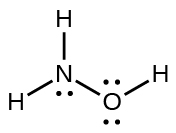
    A Lewis structure shows a nitrogen atom with one lone pair of electrons single bonded to two hydrogen atoms and an oxygen atom which has two lone pairs of electrons. The oxygen atom is single bonded to a hydrogen atom.
    61.

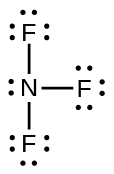
    NF₃;

    A Lewis structure shows a nitrogen atom with one lone pair of electrons single bonded to three fluorine atoms, each with three lone pairs of electrons.
    63.
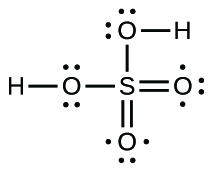
    A Lewis structure shows a hydrogen atom single bonded to an oxygen atom with two lone pairs of electrons. The oxygen atom is single bonded to a sulfur atom. The sulfur atom is double bonded to two oxygen atoms, each of which have three lone pairs of electrons, and single bonded to an oxygen atom with two lone pairs of electrons. This oxygen atom is single bonded to a hydrogen atom.
    65.

    (a) −114 kJ; (b) 30 kJ; (c) −1055 kJ

    67.

    Meiri tengiorka er á myndinni til vinstri. Það er stöðugra formið.

    69.

    HCl(g) ⟶ 1/2 H₂(g) + 1/2 Cl₂(g), ΔH₁° = −ΔH_f°[HCl(g)]; 1/2 H₂(g) ⟶ H(g), ΔH₂° = ΔH_f°[H(g)]; 1/2 Cl₂(g) ⟶ Cl(g), ΔH₃° = ΔH_f°[Cl(g)]. HCl(g) ⟶ H(g) + Cl(g), ΔH° = ΔH₁° + ΔH₂° + ΔH₃°. D_HCl = ΔH° = −ΔH_f°[HCl(g)] + ΔH_f°[H(g)] + ΔH_f°[Cl(g)] = −(−92,307 kJ) + 217,97 kJ + 121,3 kJ = 431,6 kJ

    71.

    S-F-tengið í SF₄ er sterkara.

    73.
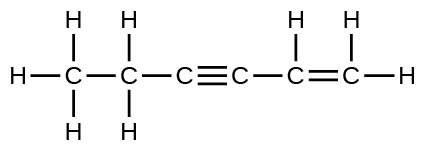
    A Lewis structure is shown. A carbon atom that is single bonded to three hydrogen atoms is bonded to a second carbon atom. The second carbon atom is single bonded to two hydrogen atoms. The second carbon atom is single bonded to a third carbon atom that is triple bonded to a fourth carbon atom and single bonded to a fifth carbon atom. The fifth carbon atom is single bonded to a hydrogen atom and double bonded to a sixth carbon atom that is single bonded to two hydrogen atoms.

    C–C eintengin eru lengst.

    75.

    (a) Þegar tvær rafeindir eru fjarlægðar úr gildishvolfinu missir Ca ysta orkuþrepið og fellur aftur á lægra n = 3 þrepið, sem hefur mun minni radíus. (b) +2 hleðsla kalsíums togar súrefnið mun nær samanborið við K og eykur þar með grindarorkuna miðað við jón með minni hleðslu. (c) Að fjarlægja 4s-rafeindina í Ca krefst meiri orku en að fjarlægja 4s-rafeindina í K vegna sterkara aðdráttarafls kjarnans og þeirrar viðbótarorku sem þarf til að rjúfa pörun rafeindanna. Önnur jónunarorka K krefst þess að rafeind sé fjarlægð af lægra orkuþrepi, þar sem aðdráttarafl kjarnans á rafeindina er mun sterkara. Að auki þarf orku til að afpara tvær rafeindir í fullu svigrúmi. Fyrir Ca krefst önnur jónunarorkan þess aðeins að stök rafeind sé fjarlægð af ytra orkuþrepi sem liggur opið. (d) Í Al er rafeindin sem fjarlægð er tiltölulega óvarin og ópöruð í p-svigrúmi. Hærri orkan fyrir Mg endurspeglar að fjarlægja þarf paraða 3s-rafeind.

    77.

    (d)

    79.

    4008 kJ/mol; báðar jónirnar í MgO hafa tvöfalda hleðslu á við jónirnar í LiF; tengilengdin er mjög svipuð og bæði hafa sömu byggingu; búist er við fjórföldun orkunnar miðað við jöfnuna fyrir grindarorku

    81.

    (a) Na₂O; Na⁺ hefur minni radíus en K⁺; (b) BaS; Ba hefur meiri hleðslu en K; (c) BaS; Ba og S hafa meiri hleðslur; (d) BaS; S hefur meiri hleðslu

    83.

    (e)

    85.

    Staðsetning tveggja para af ópöruðum rafeindum í vatni þvingar tengin til að taka á sig fjórflötungsbyggingu, og HOH-sameindin sem myndast er því hornbeygð. Í HBeH sameindinni (þar sem Be hefur aðeins tvær rafeindir til að tengjast tveimur rafeindum vetnisins) verða rafeindapörin að vera eins langt hvort frá öðru og mögulegt er og hún er þess vegna línuleg.

    87.

    Gera þarf ráð fyrir rými fyrir hvert rafeindapar, hvort sem það er í tengi eða til staðar sem stakt par. Rúmfræði rafeindapara tekur mið af staðsetningu allra rafeinda. Bygging sameindar tekur aðeins mið af rúmfræði tengipara.

    89.

    Svo lengi sem skautuðu tengin vega hvert annað upp (til dæmis ef tvö eins atóm eru staðsett beint á móti hvort öðru hvor sínu megin við miðjuatómið) getur sameindin verið óskautuð.

    91.

    (a) Bæði rúmfræði rafeinda og bygging sameindar eru áttflötungslaga. (b) Bæði rúmfræði rafeinda og bygging sameindar eru þríhyrnd tvípíramídalaga. (c) Bæði rúmfræði rafeinda og bygging sameindar eru línuleg. (d) Bæði rúmfræði rafeinda og bygging sameindar eru þríhyrnd og slétt.

    93.

    (a) rúmfræði rafeindapara: áttflötungslaga, bygging sameindar: ferningslaga pýramídi; (b) rúmfræði rafeindapara: fjórflötungslaga, bygging sameindar: bogin; (c) rúmfræði rafeindapara: áttflötungslaga, bygging sameindar: ferningslaga slétt; (d) rúmfræði rafeindapara: fjórflötungslaga, bygging sameindar: þríhyrndur pýramídi; (e) rúmfræði rafeindapara: þríhyrndur tvípýramídi, bygging sameindar: vippa; (f) rúmfræði rafeindapara: fjórflötungslaga, bygging sameindar: bogin (109°)

    95.

    (a) rúmfræði rafeindapara: þríhyrningslaga slétt, bygging sameindar: bogin (120°); (b) rúmfræði rafeindapara: línuleg, bygging sameindar: línuleg; (c) rúmfræði rafeindapara: þríhyrningslaga slétt, bygging sameindar: þríhyrningslaga slétt; (d) rúmfræði rafeindapara: fjórflötungslaga, bygging sameindar: þríhyrndur pýramídi; (e) rúmfræði rafeindapara: fjórflötungslaga, bygging sameindar: fjórflötungslaga; (f) rúmfræði rafeindapara: þríhyrndur tvípýramídi, bygging sameindar: vippa; (g) rúmfræði rafeindapara: fjórflötungslaga, bygging sameindar: þríhyrndur pýramídi

    97.

    Allar þessar sameindir og jónir innihalda skautuð tengi. Aðeins ClF₅, ClO₂⁻, PCl₃, SeF₄ og PH₂⁻ hafa tvískautsvægi.

    99.

    SeS₂, CCl₂F₂, PCl₃ og ClNO hafa öll tvískautsvægi.

    101.

    P

    103.

    óskautað

    105.

    (a) fjórflötungslaga; (b) þríhyrndur pýramídi; (c) bogin (109°); (d) þríhyrningslaga slétt; (e) bogin (109°); (f) bogin (109°); (g) CH₃CCH: fjórflötungslaga við CH₃-kolefnið, línuleg við CCH-hlutann; (h) fjórflötungslaga; (i) H₂CCCH₂: línuleg við miðkolefnið og þríhyrningslaga slétt við endakolefnin
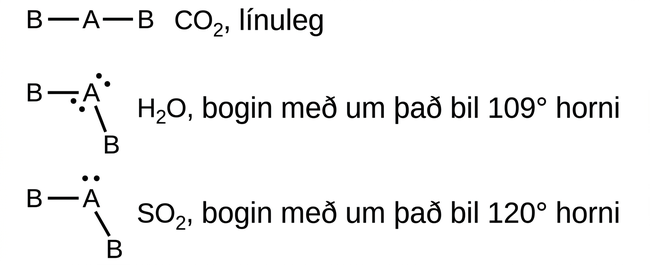
    107.
    Three Lewis diagrams are shown. The first diagram shows the letter A single bonded to the left and right to the letter B. An example, “C O subscript 2,” and the term, “linear,” are written beside this diagram. The second diagram shows the letter A with two lone pairs of electrons, single bonded to the left and lower right to the letter B. An example, “H subscript 2 O,” and the term, “bent with an approximately 109 degree angle,” are written beside this diagram. The third diagram shows the letter A with one lone electron pair, single bonded to the left and lower right to the letter B. An example, “S O subscript 2,” and the term, “bent with an approximately 120 degree angle,” are written beside this diagram.
    109.

    (a)

    The figure shows three Lewis structures that are each surrounded by brackets and have a superscripted 2 negative sign. They are written with a double-headed arrow in between each diagram. The first of this trio has a carbon atom single bonded to two sulfur atoms, each of which has thee lone pairs of electrons, and double bonded to a third sulfur atom with two lone pairs of electrons. The second and third diagrams have the same atoms present, but each time the double bond moves between a different carbon and sulfur pair. The lone electron pairs also shift to correspond with the bond changes.

    (b)

    The Lewis structure shows a carbon atom double bonded to two sulfur atoms, each of which has two lone pairs of electrons.

    (c)

    This diagram shows a carbon with one lone electron pair triple bonded to a sulfur with one lone electron pair.

    (d) CS₃²⁻ inniheldur þrjú svæði með rafeindaþéttleika (öll eru tengi án stakra rafeindapara); lögunin er þríhyrningslaga slétt; CS₂ hefur aðeins tvö svæði með rafeindaþéttleika (öll eru tengi án stakra rafeindapara); lögunin er línuleg

    111.

    Lewis-byggingin er gerð úr þremur einingum, en endurraða þarf atómunum:
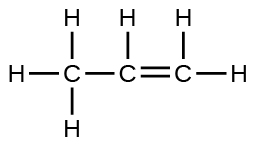
    A Lewis structure is shown in which a carbon atom is single bonded to three hydrogen atoms and a second carbon atom. The second carbon is single bonded to a hydrogen atom and double bonded to a third carbon atom which is single bonded to two hydrogen atoms.
    113.

    Tvískaut sameindarinnar vísar burt frá vetnisatómunum.

    115.

    Byggingarnar eru mjög svipaðar. Í líkanaham tekur hver rafeindahópur jafn mikið rými og því er tengjahornið sýnt sem 109,5°. Í „raunverulegum“ ham eru stöku rafeindapörin stærri, sem veldur því að vetnisatómin þrýstast saman. Þetta leiðir til minna horns, eða 104,5°.

    FYRRI KAFLI

    Kafli 6

    NÆSTI KAFLI

    Kafli 8